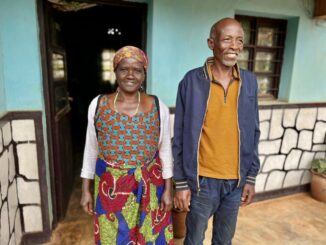

In a region of Colombia healing from decades of internal conflict, Luis Mojica has set out to empower coffee-growing communities for the long-term.
BY EMILY JOY MENESES
ONLINE EDITOR
Photos courtesy of Project to Decolonize Coffee
In an industry that often celebrates origin stories without questioning the systems behind them, Project to Decolonize Coffee (PDC) is working to put power back in the hands of coffee producers: the people who, without which, the specialty-coffee world would simply not be possible.
Founded in 2022 by Colombian-born Luis Mojica, the nonprofit, which is headquartered in Washington, D.C., has set out to empower coffee-growing communities across dozens of farms in Colombia by challenging what they identify as an outdated trade system—one steeped in centuries of colonization and inequity.

Luis shares that his own personal history is deeply tied to PDC’s mission and the communities the organization works with. “I was born in Santa Marta, Colombia, and migrated to the United States in 2000,” he says. “I’ve worked in law, government, and finance, and throughout my life in the U.S., I never forgot my Colombian heritage. (It) was a major influence behind many of the projects I pursued over the years.”
That connection would later become the catalyst for PDC. “At one point, my mentor said, ‘We should start a foundation that advocates for coffee farmers and educates consumers about what’s happening in the coffee industry,’” Luis recalls. “After two more discussions, I moved quickly. On March 15, 2022, I began establishing the Project to Decolonize Coffee.”
Building Trust With Producers
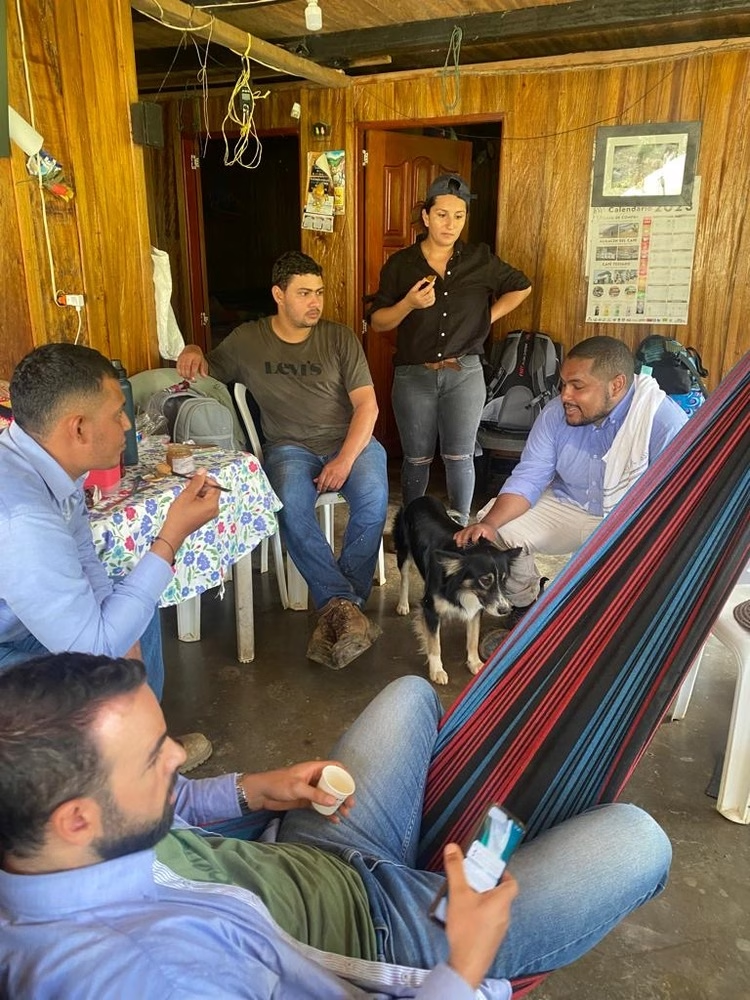
Today, PDC works exclusively in Colombia, partnering with more than 40 farms across communities in Tierralta, Córdoba: a region transitioning from decades of internal conflict.
“Because many of our farmers come from vulnerable communities, building trust is our first and most important step,” Luis told Barista Magazine. Rather than imposing a one-size-fits-all model, PDC allows communities to self-organize, identify leaders, and engage at their own pace.
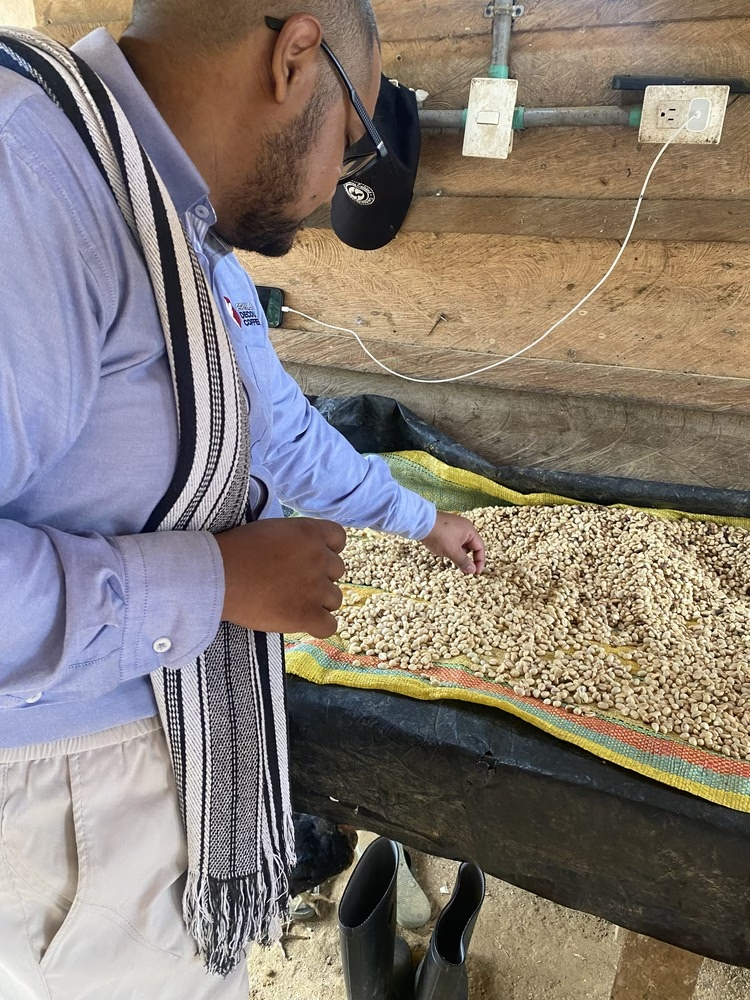
“Each region is at a different stage. Some are just starting to plant coffee, while others are preparing for their second harvest,” Luis adds. “Our goal is to bring communities together, share knowledge, and help them replicate that knowledge among themselves.”
Transitioning From Coca to Coffee
A core component of PDC’s work is supporting farmers as they transition from farming coca (the plant that cocaine comes from) to coffee.
“When I created PDC, I never imagined that a major focus would be helping farmers and communities who once saw coca cultivation as their only means of survival,” Luis says. “For my team and me, this work helps people escape the dangers associated with the drug trade while contributing to peace-building in Colombia.”
The transition process is deliberate, beginning with trust-building conversations and surveys before any field visits occur. “From there, we create a development plan for each farm or community,” Luis says, noting that support can include communal post-harvest centers, planting assistance, or pest mitigation strategies.
PDC has also launched a Coffee Pickers Program to retrain former “coca scrapers” as formalized coffee workers with fair wages and full social benefits under Colombian labor laws.
“(Aiding these transitions) means helping communities rewrite their story and giving future generations the opportunity to aspire to something beyond what hardship has dictated,” Luis says. “Seeing community members smile or sharing through tears that they never believed another path was possible, is what motivates us.”
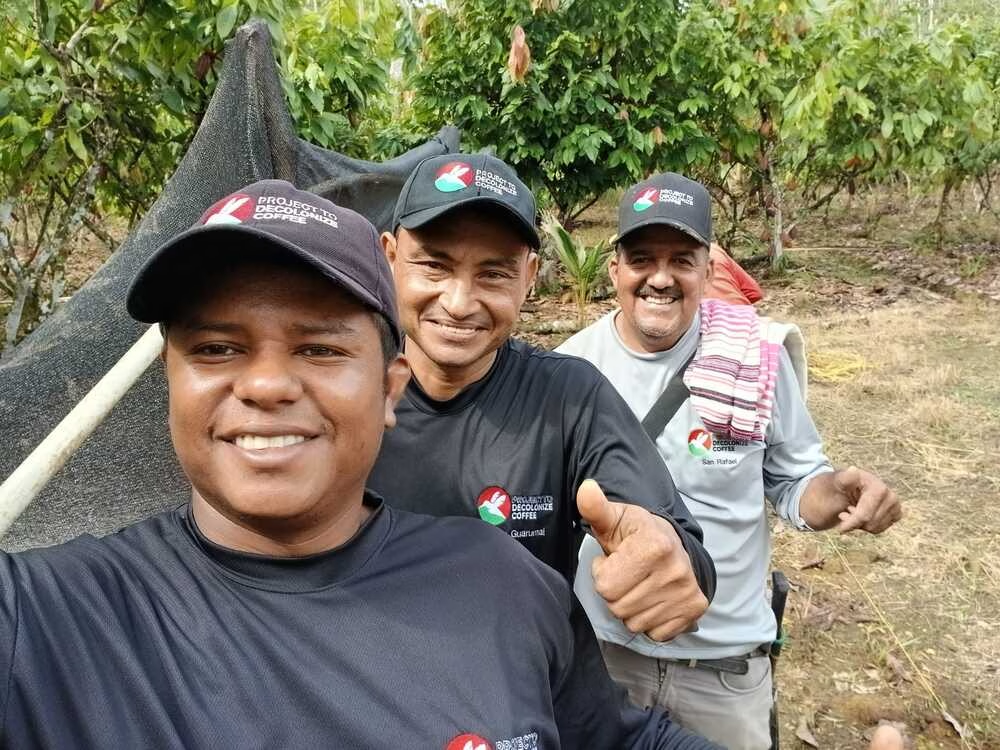
Underlying all of this work is Luis’ definition of what “decolonizing coffee” truly means: “Decolonizing coffee means equity and stability for everyone involved in the coffee process, especially those who work the hardest: coffee farmers and pickers,” he explains. “It means dignity and integrity for all, not just a select few. We advocate so farmers can enjoy the fruits of their labor without worrying whether they can feed their families.”
Luis also emphasizes that PDC’s work is meant to be a long-lasting endeavor, one that will be felt throughout the decades. “Decolonizing coffee means creating a future where new generations do not endure the same hardships as their ancestors,” he says.
Going Global
For those in the specialty coffee industry wondering how to take part in PDC’s efforts, Luis is direct. “Others in the industry can contribute by paying prices based on a prosperity model that ensures farmers thrive,” he says, also pointing to direct partnerships and roast-at-origin models—which help keep revenue within producing countries—as tangible steps toward systemic change.

Looking ahead, PDC is expanding its vision beyond Colombia and is already in early conversations with a project in Uganda. Following an appearance at the United Nations General Assembly, Luis is preparing to propose a Coalition for Coffee Equity and Empowerment: a youth-centered initiative aimed at addressing inequities across the global coffee value chain.
For PDC, decolonizing coffee isn’t a trend or a marketing tactic. It’s a long-term commitment to rewriting what’s possible—for farmers, for communities, and for the future of coffee itself.

Subscribe and More!
As always, you can read Barista Magazine in paper by subscribing or ordering an issue.
Support Barista Magazine with a Membership.
Signup for our weekly newsletter.
Read the December 2025 + January 2026 Issue for free with our digital edition.