

Drawing on samples from 34 counties, the Kenya Coffee Flavor Map connects the country’s export legacy with its growing domestic coffee culture.
BY ISABELLE MANI
BARISTA MAGAZINE ONLINE
Featured photo courtesy of the Kenya Coffee Flavor Map
What to know:
- The Kenya Coffee Flavor & Origin Expo will take place in Nairobi, Kenya, next week
- At the event, the Kenya Coffee Flavor Map will map Kenya’s coffee diversity, drawing on approximately 500 samples from 34 coffee-growing counties.
- Kenya’s coffee industry is moving past its colonial past; although Kenyan coffee became famous internationally, colonial policies restricted African farmers’ access to growing and selling coffee, and much of the country’s coffee culture remained overlooked
- Kenya’s domestic coffee culture is growing. Local coffee consumption increased from 1% of national production in 2014/15 to 4.17% in 2023/24, with more cafés attracting younger generations and connecting local coffee communities
When hundreds of professionals gather at Shamba Events Centre in Nairobi, Kenya, on November 14–16, 2026, for the Kenya Coffee Flavor & Origin Expo, the exhibitions, discussions, and cuppings may look familiar. But the Kenya Coffee Flavor Map at the expo, drawing on roughly 500 samples from 34 producing counties, carries a larger question: Who gets to tell Kenyan coffee’s story?
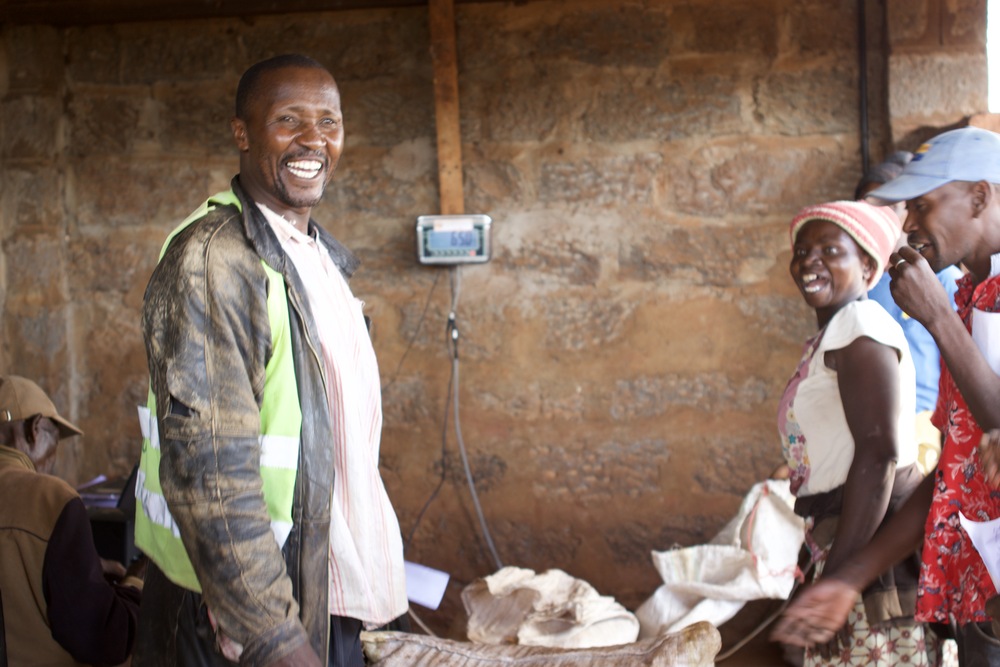
“One of our greatest challenges is ensuring that this knowledge is developed, shared, and valued locally,” says Kenyan Q Grader Edwin Mwangi, who works with Torch Coffee Kenya.
From colonial control to commercial autonomy
In 1893, French missionaries established the first recorded commercial coffee planting at Bura. Britain established the East Africa Protectorate in 1895, followed by the Kenya Colony in 1920. European settlers displaced African communities from agricultural land while restricting their right to grow coffee.
Colonial researchers at Scott Agricultural Laboratories selected the now-famous SL28 and SL34 in the 1930s. The Coffee Board was established in 1933, followed by the first auction in 1935.
In 1954, amid the Mau Mau uprising, the Swynnerton Plan expanded African access to commercial crops but favored farmers considered loyal to British authorities over suspected resistance supporters. Coffee cultivation became a tool in distributing land, opportunity and political power.
That era also consolidated the cooperative wet mills, locally known as “factories,” where smallholders delivered cherries for weighing, washing and marketing. The model still shapes Kenyan coffee today.
Independence came in 1963, but only in 2006 did the “Second Window” offer growers and cooperatives an alternative to the Nairobi Coffee Exchange through direct sales negotiated via licensed agents.
Beyond export: Coffee in Kenyan oral history
Kenya and Britain are trading partners today, yet the export system never encompassed Kenya’s entire relationship with coffee.
According to the Royal Botanic Gardens, Kew, Coffea eugenioides is native to Kenya and neighboring territories. The species is one of the two ancestral parents of Coffea arabica, alongside Coffea canephora. A 2024 genetic study estimated that the evolutionary hybridization giving rise to Arabica occurred approximately 350,000–610,000 years ago.
Kenya’s botanical coffee history therefore predates its commercial industry by hundreds of millennia.
The 1999 book Traditional Food Plants of Kenya records names including bun (Borana), kaawa (Kamba) and kahua (Kikuyu).
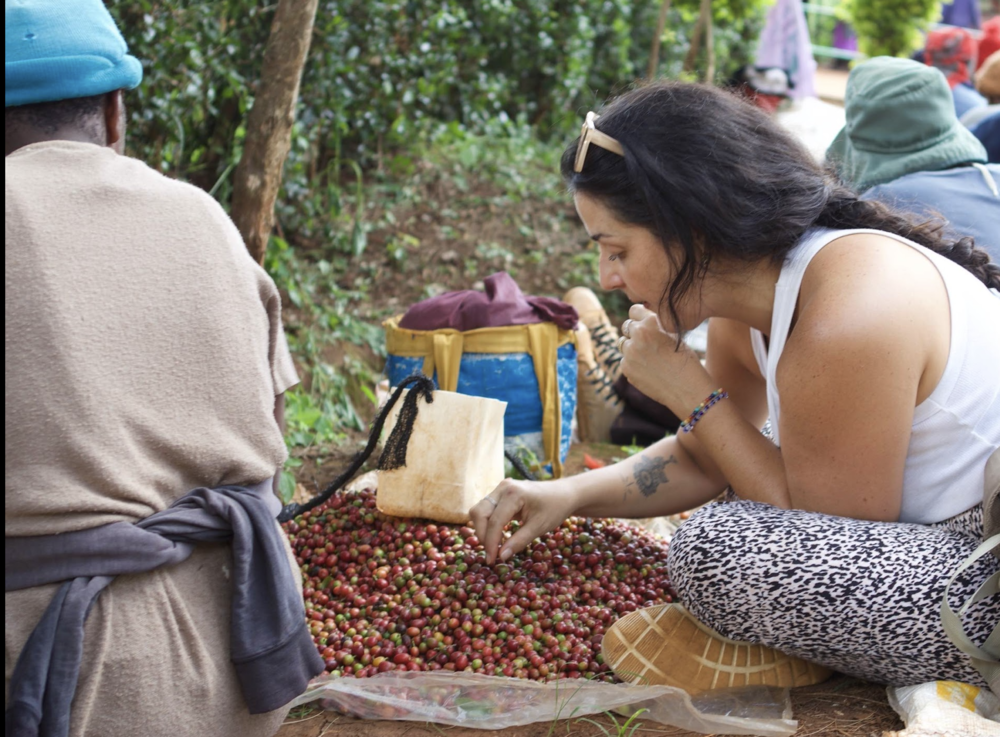
In her 2009 oral-history research, Kenyan historian Fatuma Boru Guyo documented coffee in Orma women’s peacemaking and blessing ceremonies. One preparation, torr, involved coffee fruits roasted in oil, combined with water, milk and sugar. Guyo recognized ceremonies she had witnessed her own grandmother perform. Such traditions existed beyond the official history of commercial coffee.
Meanwhile, an export-oriented economy left generations of domestic consumers more accustomed to tea or imported instant coffee, while celebrated Kenyan beans traveled abroad.
As I reported in my Nairobi field report in the June/July 2024 print issue of Barista Magazine, the contradiction was visible even among communities working with the crop.
The numbers are changing, and those markers point to a bright new reality. According to Kenya’s Agriculture and Food Authority, domestic coffee consumption rose from just 1% of national production in 2014/15 to 4.17% in 2023/24, reaching 2,062 metric tons. Coffee outlets increased from 231 in 2019 to 757 in 2022.

“Our cafés are full of people who would have ordered tea ten years ago,” says Ritesh Doshi, CEO of Spring Valley Coffee, the largest specialty café chain in Nairobi and one of the speakers of the Flavor Map Convention.
The Flavor Map connects that changing domestic culture with scientific research.
Torch Coffee Kenya, the project’s technical partner, previously developed Yunnan Coffee Flavor Maps in China between 2021 and 2024. The Kenyan initiative aims to bring together 300 cuppers, with a publicly available sensory atlas planned for 2027.
Among the November speakers is Martin Shabaya, four-time Kenyan barista champion and 2021 World Barista Championship finalist, featured on Barista Magazine’s June/July 2023 cover. Producer Dr. Rosebella Langat and other Kenyan researchers and entrepreneurs will also participate.

For Kenyan barista trainer Diana Achieng, younger generations are changing the conversation. “With the younger generations, coffee shops and cafés are becoming lifestyle hubs and networking hubs,” she says. She hopes the map shows that “Kenyan coffee can be such a wide, beautiful range,” and creates stronger connections between farmers, baristas and cuppers.
“We should not simply be part of the global coffee conversation; we should be helping shape its future,” Martin Shabaya says.
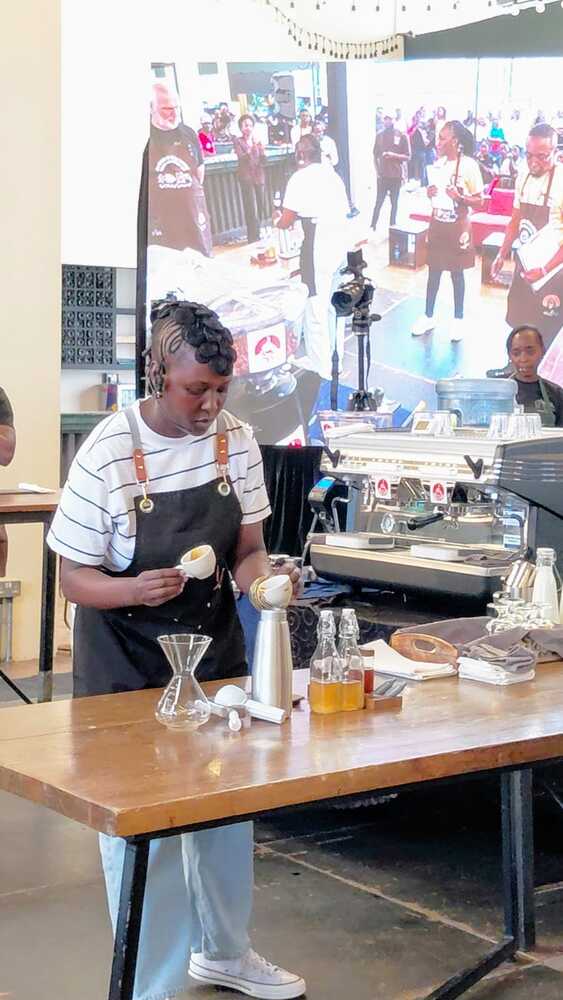
Event information
The Kenya Coffee Flavor & Origin Expo takes place November 14–16, 2026, at Shamba Events Centre, Loresho, Nairobi. The Kenya Coffee Origin Conference opens November 14, followed by blind sensory evaluations on November 15–16.
For the full conference program and tickets, visit Creative Coffee Week. For project information and cupping participation, visit the official Flavor Map website.
ABOUT THE AUTHOR
Isabelle Mani (she/her) is a writer, journalist, and communicator specializing in the international coffee industry. Since 2017, she has focused on writing articles and features for various international coffee news outlets. Isabelle has traveled to coffee-producing countries such as Colombia, Kenya, Rwanda, China, and Brazil to study and research coffee. She holds training certifications from the Specialty Coffee Association (SCA) and the Coffee Quality Institute (Arabica Q Grading).

Subscribe and More!
As always, you can enjoy your own copy of Barista Magazine by subscribing or ordering an issue. Long live physical media!
You can read the digital edition of Barista Magazine for free here.
Support Barista Magazine and show your love with a Membership.
Signup for our weekly newsletter.
Join us at Camp Coffee Shop in Napa, California.