
While there are hurdles to obtaining organic certification, how can doing so benefit coffee producers long-term?
BY MELINA DEVONEY
BARISTA MAGAZINE ONLINE
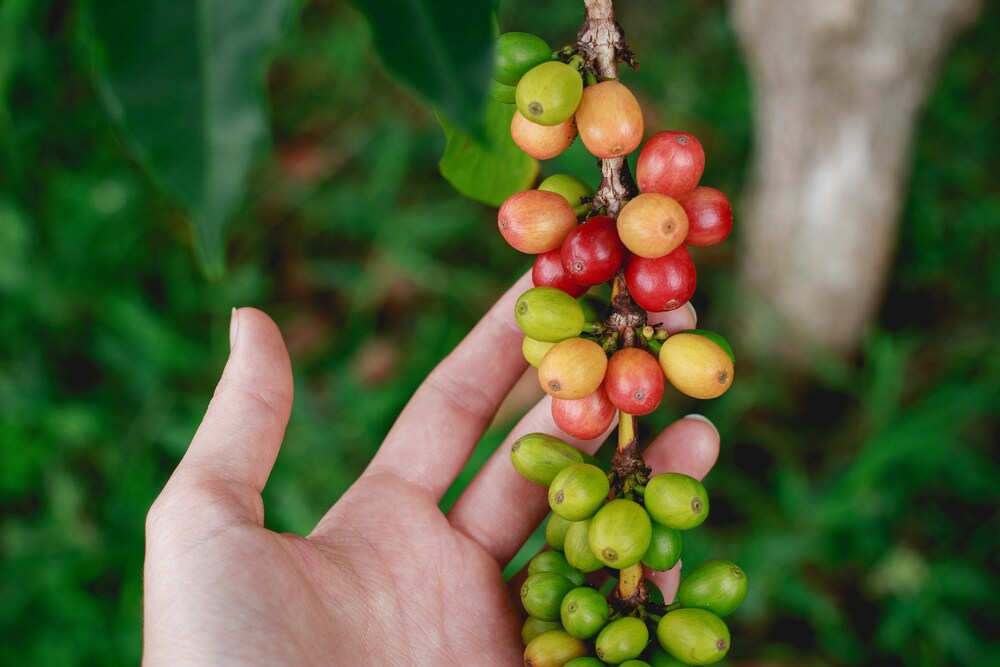
Featured photo by Katya Ross
What to know:
- While some in the coffee industry argue against organic certification in coffee, pointing to the difficulties that coffee producers often face in obtaining it, others present ways that certification can benefit producers long-term
- To those for organic certification, the certification provides a trusted standard for sustainability; unlike loosely defined terms such as “natural” or “sustainably sourced,” organic certification is regulated by law, helping consumers distinguish genuinely organic products from greenwashed marketing claims.
- Proponents also argue that organic certification can increase consumer demand and coffee sales. Research shows that consumers recognize and value the USDA Organic label, with some willing to pay more for certified coffee
- Certification can improve farmers’ income and long-term farm sustainability. Certified organic coffee earns producers an estimated $0.30–$0.40 more per pound. Certification can also provide access to agricultural training, marketing opportunities, and more consistent financial incentives to maintain organic farming practices
Yesterday, we released part one of this two-part article, where we discussed organic certification in coffee and the difficulties that producers often come across in obtaining it. Today, we’ll discuss the flip side—the pros of attaining organic certification, for producers and buyers alike.
A case for certification
On the bright side of certifications, creating a legal organic definition eliminated the guesswork for consumers and set a global understanding of environmentally-friendly agriculture.
Conversely, other sustainable terminologies have been co-opted by corporate and political interests. Corporations with divergent priorities for our food systems have “watered down” sustainability labels in order to slap them on undeserving products, creating a “sea of weak greenwashed standards” on retail shelves.
Some corporations have become their own certifiers in order to skirt around third-party audits. For example, Syngenta, a leading AgTech group, labels their programs as “regenerative organic” while still manufacturing and applying agrochemicals. Nestle’s sustainability program includes its own sustainable coffee certification (in collaboration with Rainforest Alliance) that allows chemical agricultural inputs.
Consumer “label fatigue” is growing in tandem with the number of different ecological and social certifications on coffee bags – consumers can’t necessarily vet them all. Studies show the risk of consumers conflating the myriad of claims on coffee labels: In a 2024 survey published by the American Journal of Clinical Nutrition, 42% of respondents looked for labels stating “organic” as an indicator of environmental sustainability food, while 47% looked for “locally grown” and 47% “sustainably sourced” as indicators; in a 2025 survey conducted by the International Food Information Council (IFIC), 30% of American consumers looked for “organic” labels when shopping for food and beverages, while 41% looked for “natural.” Whereas “locally grown,” “sustainably sourced” and “natural” have no universal definitions, organic certifications are regulated by law.

Green coffee buyers and roasters can communicate their environmental standards without a certification, but the organic certification generally presents a quicker and better-understood method of relaying the message to consumers; a 2022 IFIC survey found that 59% of Americans recognize the organic label across food and beverages, and 79% of US coffee drinkers recognize the USDA organic label on coffee in a 2022 survey by the Smithsonian Migratory Bird Center. With this understanding, respondents of the Smithsonian survey were willing to pay $5.76 more per bag for organic over conventional coffee.
Regardless of what producers and roasters think of different certification schemes, they can’t argue with the fact consumer demand is driving organic certification.
Research continues to show that consumers are willing to pay premiums for organic-certified coffee, and that the global organic coffee market is projected to climb past $23 billion within the next decade.
“Over the years, other certifications have come to the fore and waxed and waned in interest and popularity. But organic is, in our opinion, the pinnacle of environmental excellence,” says Jim Cannell, founder of Jim’s Organic Coffee in Massachusetts. “Many visits to the farms over the years reveal flora and fauna and deep topsoils that are unmatched in conventional coffee.”
In 1996, Jim founded one of the world’s first 100%-organic coffee companies—before the USDA-certified organic label existed. “The organic industry simply policed itself in terms of certification. Then the USDA essentially put its stamp on the certification industry organic had created,” Jim says.

How certification can benefit farmers
To Jim, organic certification not only offers a tried-and-true strategy for protecting the environment, but for earning farmers a better income. Today, certified organic coffee typically earns producers $0.30-0.40 more per pound in the global market.
“The ‘standard’ premiums we and others pay for organic coffee warrant the cost of certification. But it’s worth mentioning that for the farmers, it’s a labor of love. They would be growing this way anyway, they deeply believe it’s the right thing to do,” Jim says.
Acknowledging that doing the right thing shouldn’t be a burden, some coffee buyers help lower the barriers to entry for certification, and the USDA offers a cost-sharing program. “Many small producers or producer groups work with an exporter who in turn assist them with how to go about getting certified, financing the cost of certification, and even making recommendations through shared experience on organic methods,” Jim explains.
Compared to uncertified organic-by-default farms, certified farms are better positioned to receive training on best agricultural practices and product marketing guarantees, which modestly increase farm yield and sales, respectively. Uncertified farms often don’t have legal or financial incentives to use organic practices during poor harvest seasons or unfavorable market conditions.
Historically, organic-by-default farms “quickly go into a state of extremely low yield and quality,” Jim says. “Now, with coffee prices so high, there is ample incentive for farms to increase yields; despite the high cost of chemical fertilizer. So, it is more important than ever to ensure certified organic farmers stay that way, with the premiums we (and others) pay.”
Certification offers peace of mind that each link in the value chain was held to a high standard, Jim says.
“Certification is the chain that ensures the consumer that they are making the right choice,” he says. “Something labeled simply ‘sustainable’ with either no or a not-known certification I wouldn’t walk away from; I’d run.”
ABOUT THE AUTHOR
Melina Devoney (she/her) is a barista and freelance writer in Los Angeles zeroed in on coffee and agriculture. She aims to amplify the voices of farmers and a diversity of perspectives within the coffee industry, and she’s happiest when running on wooded trails and dancing at concerts.

Subscribe and More!
As always, you can enjoy your own copy of Barista Magazine by subscribing or ordering an issue. Long live physical media!
You can read the digital edition of Barista Magazine for free here.
Support Barista Magazine and show your love with a Membership.
Signup for our weekly newsletter.
Join us at Camp Coffee Shop in Napa, California.