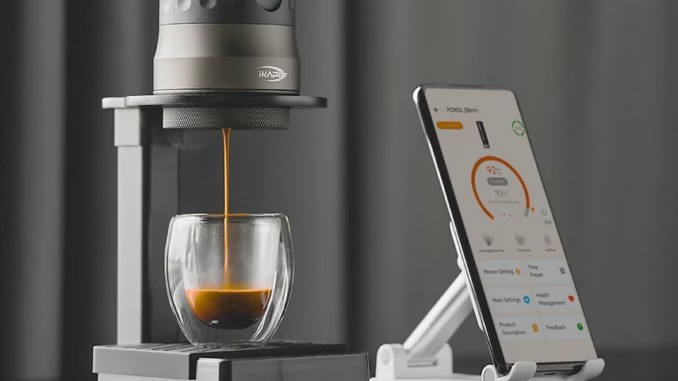
Portable and Bluetooth compatible, the IKAPE KAPO K2 Pro promises to take on-the-go espresso to all-new levels. Today, we put it to the test.
BY VASILEIA FANARIOTI
SENIOR ONLINE CORRESPONDENT
Featured photo courtesy of IKAPE. All other photos by Vasileia Fanarioti.
What to know:
- Known for their coffee accessories, IKAPE has ventured into the portable espresso machine market with the KAPO K2 Pro
- The machine is compatible with 58mm portafilters and can be controlled via Bluetooth
- At a 1:2 ratio with a medium-dark blend, the results for espresso are impressive
Portable espresso machines have long felt like a category defined by compromise. The IKAPE KAPO K2 Pro arrives with a different proposition: full 58mm compatibility, Bluetooth app control, a 13,500mAh battery, and enough customization to satisfy a particular palate.

IKAPE—short for “I Keep A Perfect Espresso”—built their reputation on accessories before making this move into machines, developed in collaboration with CERA+. The K2 Pro is their most ambitious product yet, and it largely delivers.

First impressions
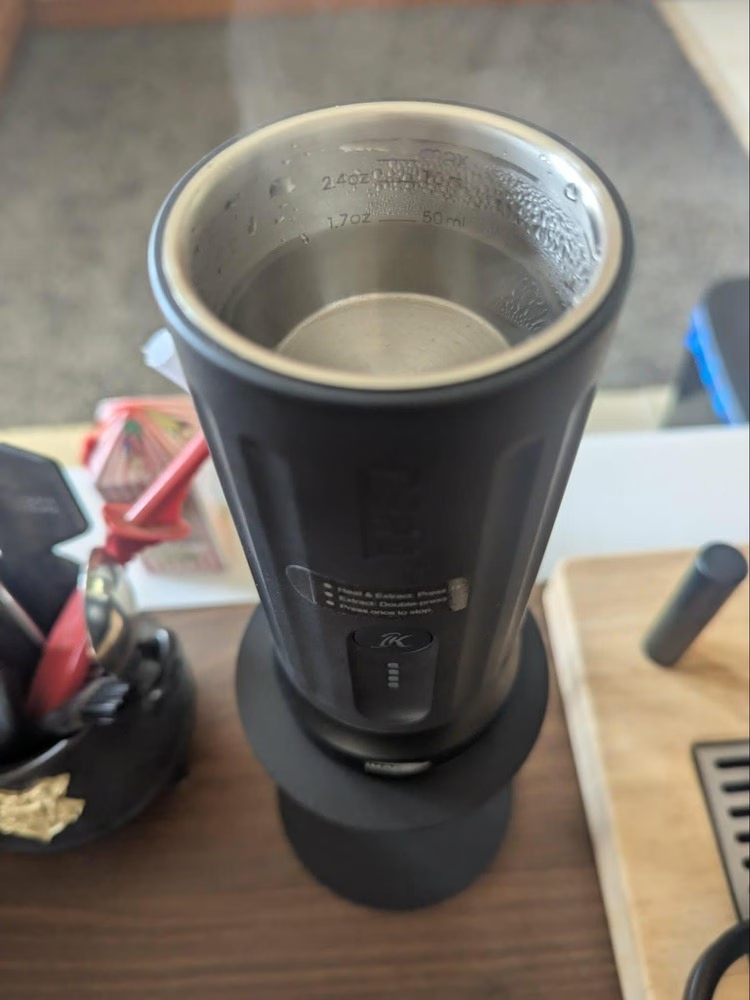
The K2 Pro is cylindrical, around 22cm tall, 7cm wide, and just over 820 grams. The matte plastic exterior feels solid, and what matters most—everything in contact with hot water—is food-grade stainless steel or silicone. The 80ml stainless-lined water tank sits at the top, a single illuminated control button with four battery LEDs in the middle, and a fully metal 58mm bottomless portafilter holder at the bottom.
That 58mm compatibility is the headline feature. Most portable machines use pressurized proprietary baskets holding 8–16g. Here you get a standard non-pressurized basket for 18–20g, swappable with any other 58mm basket you own. If you already have a 58mm setup at home, your tools come with you.
What’s in the box
The standard kit includes:
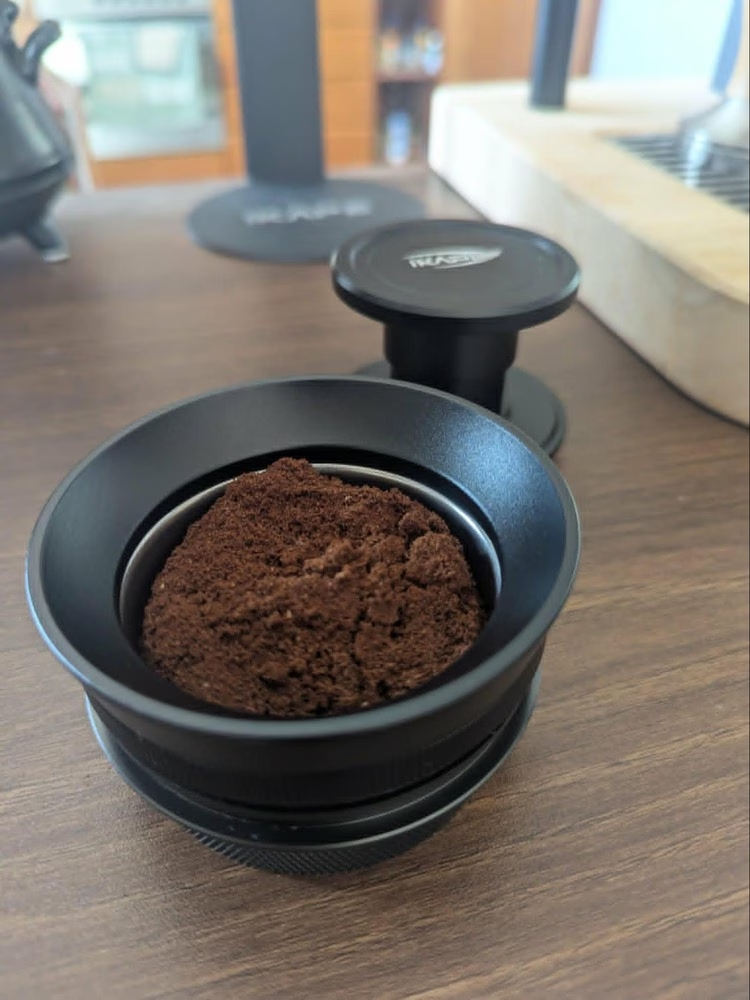
- Self-levelling tamper (58.35mm — a tight, accurate fit)
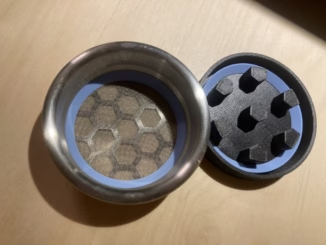
- Puck screen
- Magnetic dosing ring
- Single-needle WDT tool
- Cleaning brush and measuring scoop
- USB-C charging cable
- Velvet carrying pouch
- Removable plastic cup base
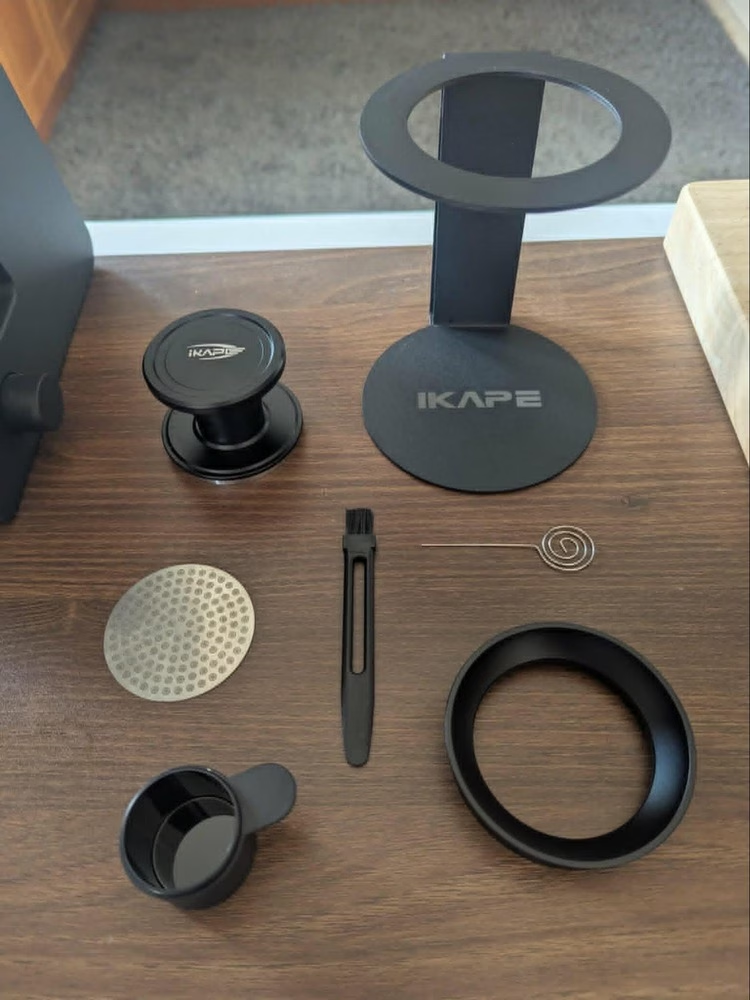
The puck screen is worth using every time—it distributes water more evenly and makes cleanup significantly easier. The single WDT needle is functional but basic; a multi-needle tool is worth adding if you plan to use this machine regularly. A metal stand is sold separately and genuinely improves workflow, freeing your hands and letting you watch the extraction properly.
Operation via the device or Bluetooth
The K2 Pro can be operated in two ways: via the single physical button on the device, or through the companion Bluetooth app, called HappyGo (available on both iOS and Android).
From the button alone, you have two modes. A long press initiates heat and extract—the machine heats the water to your preset temperature, then begins extraction automatically. A double press triggers extraction only, bypassing the heater, which is useful when using pre-heated water from a kettle and wanting to conserve battery.
The app unlocks a third mode—heating only, without extraction—useful for preheating the device or preparing hot water for other purposes. Beyond that, the app is where you set all your brewing parameters: extraction temperature (38–96°C), pre-infusion time, standstill time, total extraction time, and flow speed (slow, medium, fast). Saved settings carry over to button-initiated brews, so once you’ve dialled in your preferences, you don’t need to open the app every time. The app also shows battery level, extraction history, and allows you to rename the device, change language between English and Chinese, and set timed extraction schedules.

In the cup
From button press to espresso: around four minutes total, including heating. I worked with an 18g dose, filling the tank to the max line and stopping extraction manually once I hit my yield—I found this more reliable than filling a precise volume and letting it run. There’s no three-way solenoid valve, so a few extra grams can sneak into the cup as pressure releases; cutting the shot with intention matters.
I set the temperature a couple of degrees higher than my target to compensate for heat loss as water travels through the device. Even when using pre-heated water from a kettle, I’d still long-press to let the machine bring everything up to temp before extracting—it keeps things more stable and consistent shot to shot.
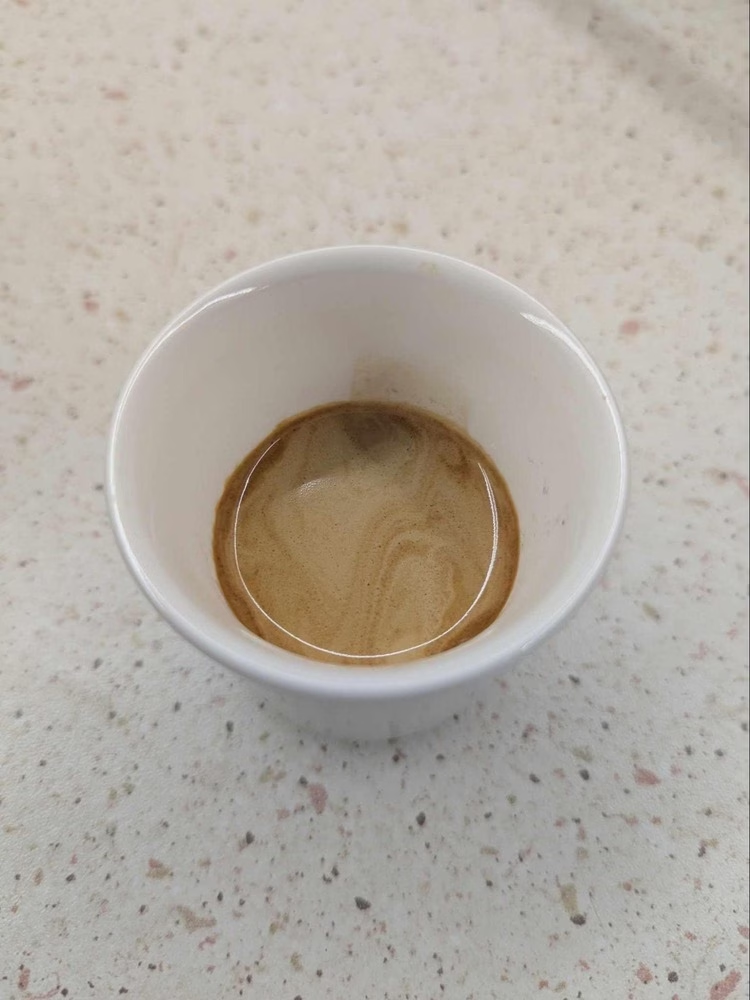
At a 1:2 ratio with a medium-dark blend, the results were genuinely impressive: thick crema, good body, clean finish. In milk drinks the K2 Pro really shines—a flat white from this machine is hard to fault. With a more forgiving, chocolatey, lower-altitude coffee, you can pull shots that hold their own against plenty of entry-level home machines.
Where things get more interesting—and more demanding—is with lighter roasts. High-altitude naturals and washed Ethiopians with narrow extraction windows will push the machine’s limits. Without the full thermal mass of a preheated home machine, temperature consistency across the extraction is harder to sustain, and that gap shows in brightness and complexity.
It’s not impossible, but it requires dialling in more carefully and accepting that the ceiling is lower. For straight espresso from challenging light roasts, patience is part of the workflow. For milk drinks, the same coffee becomes much more forgiving. Battery life sat at five to six full heat-and-brew cycles in my testing with 70–80ml fills—solid for this category. Charging from empty took under three hours.

Cleaning + maintenance
Cleanup is straightforward and quicker than you might expect. After each shot, unscrew the basket holder, knock out the puck and puck screen, and rinse both under running water. The shower screen at the bottom of the machine can be wiped with a cloth after each use, or removed entirely for a more thorough rinse. For flushing the internal water path, a short extraction cycle with clean water does the job.
The machine body isn’t designed to go under running water directly, but everything removable cleans easily and dries fast. It also doesn’t get uncomfortably hot to the touch after a shot, which makes handling it immediately after extraction a lot less fiddly than you’d expect.
Final thoughts + who it’s for
The K2 Pro suits someone already comfortable with a semi-automatic setup who wants to take that workflow on the road—or someone with limited kitchen space who wants a full-format espresso experience without committing to a full-size machine. It is not plug-and-play. It expects you to understand puck preparation and grind dialing, and it will reward you for that knowledge. For beginners, the learning curve is real. For those who already know their way around a portafilter, it clicks into place quickly.
The 58mm compatibility alone separates it from most of the competition. The app control, temperature settings, and pre-infusion options push it further. The honest limitations—a still-maturing app, flow control that needs more development, and a narrower ceiling with light roasts—are the expected trade-offs for a machine this compact, not reasons to walk away. For anyone who wants to make proper espresso wherever they are, the K2 Pro is currently one of the strongest options on the market.
ABOUT THE AUTHOR
Vasileia Fanarioti (she/her) is a senior online correspondent for Barista Magazine and a freelance copywriter and editor with a primary focus on the coffee niche. She has also been a volunteer copywriter for the I’M NOT A BARISTA NPO, providing content to help educate people about baristas and their work.

Subscribe and More!
As always, you can get a hard copy of Barista Magazine by subscribing or ordering an issue.
Support Barista Magazine and show your love with a Membership.
Signup for our weekly newsletter.
Join us at Camp Coffee Shop Aug. 10-13 in Napa, California.
Read the April + May 2026 21st Anniversary Issue for free with our digital edition.
For free access to more than six years’ worth of issues, visit our digital edition archives here.