
As coffee leaders strive to bridge the gap between roasters & producers, Pinewood Coffee emphasizes origin trips as a key part of the movement.
BY EMILY JOY MENESES
ONLINE EDITOR
Featured photo by Clint McKoy. All other photos courtesy of Pinewood Coffee Co. unless otherwise noted.
Throughout the specialty-coffee world, the term “origin” gets tossed around frequently, with bags of coffee proudly announcing the countries they come from—while most consumers have little understanding of what real life is like in those regions.
But how can we as an industry begin to bridge that gap? What does it mean to truly connect with origin countries—the places where coffee’s journey begins—in a way that’s tangible and authentic?
For café owners, baristas, and roasters not living in regions where coffee grows, origin trips can shape how we understand coffee sourcing, sustainability, and the people behind the product. Taking the time to visit coffee farms in origin countries can transform abstract supply-chain conversations into real connections built on reciprocity and trust.
For the team at Franklin, Tennessee’s Pinewood Coffee Co., origin visits are foundational to how the roastery approaches sourcing and partnerships. “Origin trips ground us in reality,” says Robbie Melton, who oversees roasting, green buying, quality, and education at Pinewood.
We spoke to Robbie and Pinewood Coffee Co. founder Jake Sudduth to learn more about their sourcing model and how origin trips have influenced their approach to coffee.
Life beyond the spreadsheet
For café owners and roasters operating thousands of miles away from producing regions, the coffee-growing process can easily become conceptual. Conversations about quality, pricing, and sustainability often happen through emails and spreadsheets. But stepping onto a farm—and actually witnessing the labor of coffee production, from start to finish—can change that perspective dramatically.
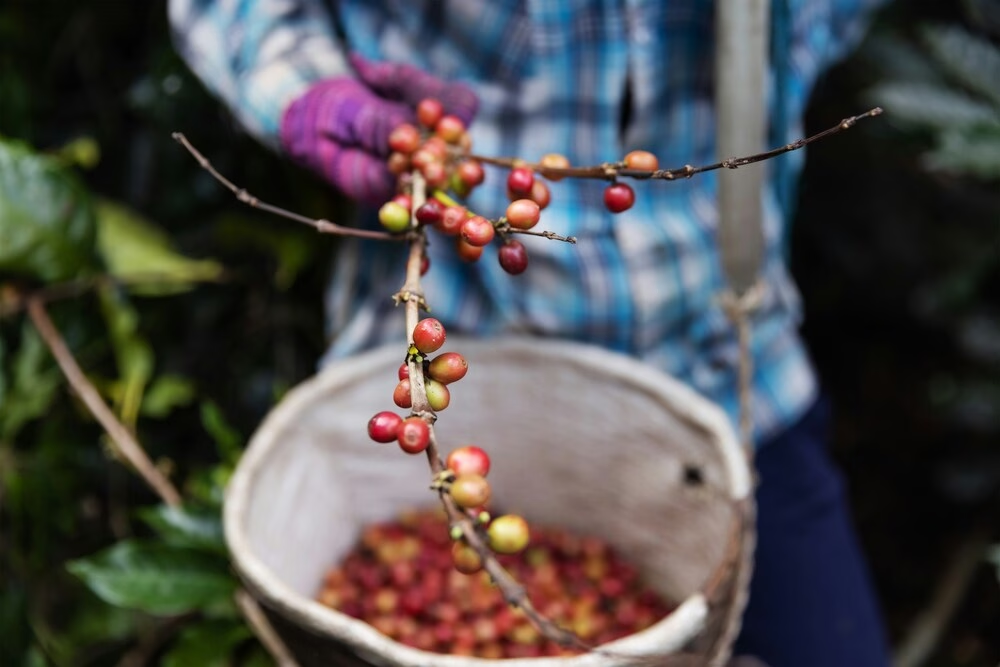
“It’s one thing to talk about sourcing in abstract terms, but when you stand on a farm, see the picking process, understand how weather impacts yield, and meet the families behind the crop, it changes how you approach everything, from pricing to roasting to storytelling,” Robbie told Barista Magazine.
That firsthand perspective is especially important as leaders in the specialty-coffee world continue to call for more transparency and equity across the industry. Understanding the realities of coffee production—from labor challenges to climate challenges—helps cafés and roasters make more informed decisions about how they buy their coffee and present it to consumers.
Bridging the gap between producers and roasters
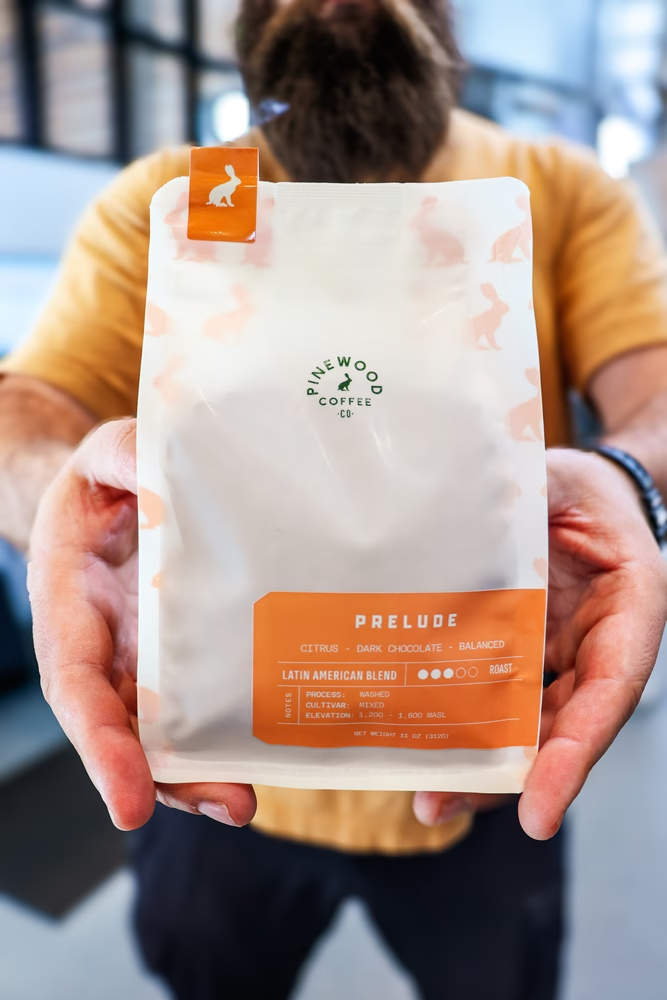
Origin visits deepen relationships with producers, something Pinewood considers essential to its sourcing philosophy. The company prioritizes working with what they describe as “trusted estates.”
“When we talk about ‘trusted estates,’ we’re talking about long-term, transparent relationships—not just great-tasting coffee, though quality is absolutely foundational,” Robbie says. “A trusted estate is one where we know the producers by name, understand their farming practices, and have clarity into how workers are treated and compensated.”
While many of these relationships may begin through digital communication, visiting origin can strengthen them significantly. In-person interactions foster trust in ways that emails and messaging apps simply can’t.
“For us, relationships are key,” Robbie says. “That means direct communication with producers whenever possible—sometimes that starts digitally, through conversations on WhatsApp or through our import partners, and ideally it deepens over time through origin visits. Being able to stand on a farm, see the operation firsthand, and build face-to-face trust reinforces everything.”

Working with producers toward a more equitable industry
Pinewood’s partnership with Hacienda La Minita in Costa Rica—an estate widely respected for both its coffee quality and its social programs for workers—is just one example of how these producer-roaster relationships can evolve through direct interaction.
“Hacienda La Minita has long been recognized not only for exceptional cup quality, but also for its deep commitment to people,” Robbie says. “Their farm in Costa Rica invests heavily in worker well-being, (by) providing on-site housing, free childcare, healthcare, dental clinics, and living-wage compensation.”
For Pinewood, visiting the farm earlier this year affirmed why the company prioritizes long-term partnerships over impersonal transactions. “We visited the farm in February 2026, which only deepened that trust,” Robbie says. “Seeing their operations firsthand—from cultivation to processing to export—reinforced why we prioritize long-term partnerships over one-off purchases.”
Understanding what shapes coffee quality
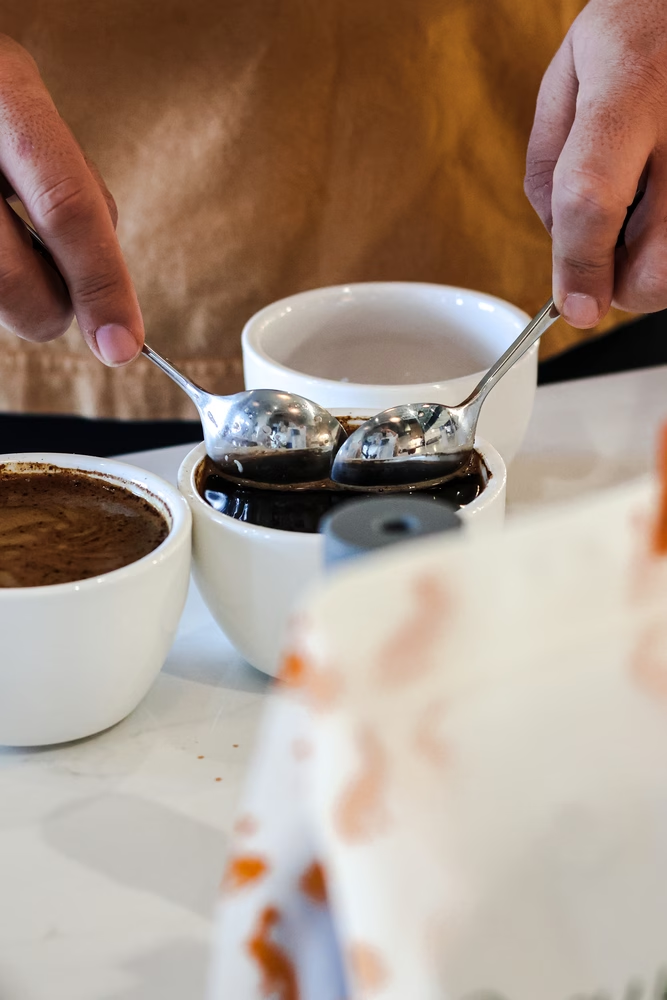
Origin trips also allow roasters to better understand the variables that influence coffee quality. Harvest timing, weather patterns, processing infrastructure, and labor availability all affect the final cup, and yet, many of these factors are difficult to fully grasp without being present on the ground.
According to Robbie, origin visits help the Pinewood team better understand these harvest challenges and quality variables. Just as importantly, these visits encourage transparency in labor and environmental practices—as well as accountability on the roastery’s end. “Origin visits also keep us accountable,” Robbie says. “They allow us to nurture our partnerships firsthand and build transparent, genuine relationships.”
A shared responsibility
As consumer interest in ethical sourcing continues to grow, cafés and roasters are realizing their responsibility lies in both serving great coffee and understanding where it comes from and how it was produced.
Jake Sudduth, Pinewood’s Founder and Director of Business Development, sees his company’s approach as just one part of a broader shift in the way the specialty-coffee industry runs.
“We certainly don’t see ourselves as the first to approach sourcing this way,” he told Barista Magazine. “That said, we do believe this collective shift raises the bar for specialty coffee as a whole. It reinforces the idea that a café or roaster’s responsibility doesn’t stop at brewing a great cup—it extends to how we source, how we price, and how we communicate those decisions.”
“Coffee has one of the most complex global supply chains in food and beverage, and consumers are more aware than ever of where their products come from,” says Jake. “For us, the standard begins with honesty: being transparent about direct trade relationships, about who we work with and why, and about what we’re still learning.”
For coffee professionals who may never live in producing countries, origin trips offer something priceless: perspective. They bridge the gap between café and farm, transforming sourcing from a transactional process into an equitable relationship built on shared responsibility.

Subscribe and More!
As always, you can read Barista Magazine in paper by subscribing or ordering an issue.
Support Barista Magazine with a Membership.
Signup for our weekly newsletter.
Read the February + March 2026 Issue for free with our digital edition.
For free access to more than five years’ worth of issues, visit our digital edition archives here.