

The benefits of serving warmth where everybody knows your name.
BY RACHEL MORRISON
FOR BARISTA MAGAZINE
Featured photo courtesy of Getty Images
What to know:
- Genuine connection is what turns first-time customers into loyal regulars; remembering customers’ names, orders, preferences, and stories creates a sense of belonging that goes beyond simply providing good coffee or service
- A strong café community starts with kindness and intentional training; café owners can cultivate regulars by hiring people who prioritize warmth and teaching baristas to actively build relationships with customers from their first interactions
- Customer relationships should be shared across the entire team; while beloved baristas can create strong loyalty, cafés should train all staff to recognize and connect with regulars so the customer experience remains consistent even when favorite employees are absent or leave
You can see it in their face, the appreciation and relief, as you say, “Your usual latte today, Richard?” or even, “Here’s your mocha, Amelia, a little less hot and no whipped cream.” These interactions—quick, efficient, and personal—transform the act of grabbing a quick cup of coffee into a moment of genuine connection.
For baristas, regular customers simplify the job. There’s less indecision at the register, fewer impatient glances from those waiting in line, and often, regulars are bright spots in the shift. For café owners, regulars are indispensable, not only for steady sales but as passionate advocates who spread the word about your café, drawing in new customers through word-of-mouth and social media.
In those early morning, pre-caffeine moments, regulars appreciate not having to articulate their order. It’s a small comfort, a moment of ease that makes them feel cared for, no matter what comes next. But how does this connection start? What makes someone walk into a café for the first time and decide this is the place for them? Is it convenience? A warm, friendly interaction with a barista? The best cup of coffee they’ve ever had?
For Kate Vrijmoet, founder and CEO of Chicago’s Necessary & Sufficient Coffee, the key is connection and friendliness. “We focus on kindness when we hire,” says Kate. “I used to focus on coffee passion first, but I do that second now and found that people who can be kind to themselves can be kind to others. It makes for a much better work environment for the team and a much better vibe for the customers.”
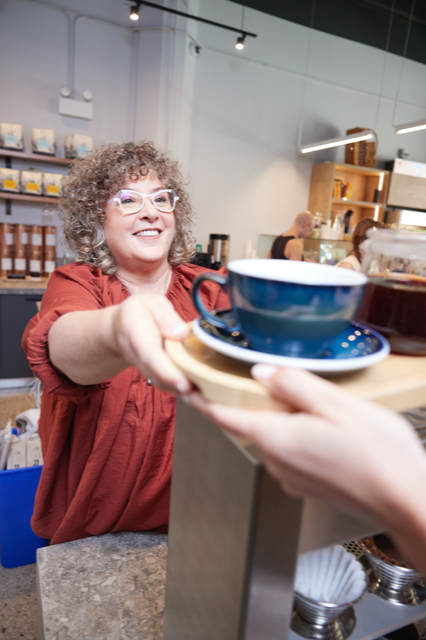
Necessary & Sufficient’s first location started as a placemaking art project and quickly became a catalyst for community revitalization in Logan Square. “When I bought my studio in Logan Square, it had a tiny storefront I couldn’t really use, so I thought it could maybe serve the community somehow,” says Kate. “I interviewed the people who lived here, and they all wanted a coffee shop. The neighborhood was really run down and just two blocks (in size), but now it’s completely revitalized, and it’s got other women-owned businesses serving the community as well.”
And how do you cultivate an environment where you can establish a loyal, consistent customer base with people who want to spend time with your baristas, drink the coffee you serve, and enjoy the environment you cultivated? It takes more than trendy pendant lamps, viral TikTok blueberry lattes (though creative drink combos and welcoming personalities certainly help), and even strong customer service.
Regulars aren’t an accident. They result from a relationship built on trust, like any other. And it starts the moment the customer walks in the door of your shop for the very first time.
The art of cultivating regulars
Focusing on community needs and delivering on that promise has made Necessary & Sufficient a neighborhood staple. Kate’s experience fostering connection through art—helping people connect to themselves and, thus, others—has informed her approach to staffing and training. This has cultivated environments for both of her locations where customers and baristas feel a sense of belonging and ownership of the space.
Necessary & Sufficient’s Logan Square location is about 70% regulars, some of whom come in multiple times a day. The café is a true “third space” for community events, daily coffee runs, and social engagement. Regular customers there have a sense of ownership, thinking of it as “their” coffee shop, which keeps them coming back. “There’s a sense of belonging and inclusivity here, and what we share with our customers is a pride of place,” Kate says. “We’re really situated in the neighborhood, interior to the community, reflecting community values. We explore our ideas and opinions together, which helps us honor the humanity in each other.”
Training baristas to build relationships
Creating a welcoming atmosphere and cultivating regulars isn’t just about having a great space; it’s about fostering connections. Training new baristas to nurture these relationships is essential for maintaining a café culture that attracts and retains regular customers.

Larry Legend, lead barista at Artifact Coffee in Baltimore, is a virtuoso in first-rate customer service. He exemplifies genuine care and compassion for everyone who walks through the door, and this propensity has earned him a devoted following. His approach to work is infused with love and attentiveness, becoming the foundation of his long-lasting connections with customers.
But it’s not just love that builds these relationships. Larry makes a noticeable effort to get to know his customers, remembering their drink orders and establishing genuine connections. He carries a small notebook in his pocket and will write down customer names and orders when he first learns them. “It’s powerful for people to be acknowledged by name,” Larry says. “I learn their drink and their name and speak with them, sometimes slowing down the line intentionally. Over time, I learn their story and their palate.”
This attention to detail means more to his customers than just the convenience of not having to articulate their drink order. Being near several universities, a large number of Artifact Coffee’s frequent customers are students. “We have a lot of regulars who will bring their parents,” Larry says. “And it makes parents feel good, like, ‘This guy is going to take care of my daughter.’” This connection extends beyond the moment, creating lasting memories for students during their college years. For their parents, it provides a sense of peace knowing their children have a safe and welcoming place to go.
People like Larry are enormous assets in the café—but there are downsides to being such a beloved figure. “People have built loyalty to me as a person behind the register,” Larry says. “Some people have said that if they walk in here and don’t see me, they leave. It can be overwhelming. I can’t be there every day.”
To address this, Larry leads by example, encouraging other baristas to make an effort in their own ways to remember customers’ names and orders. This helps distribute customer loyalty more evenly among the staff, ensuring that the café’s warm, welcoming atmosphere isn’t just tied to one person.
Training tips: Building a team of welcoming baristas
When it comes to training new hires, many cafés start them on the register. This allows newbies to familiarize themselves with the menu, the point-of-sale system, and, most importantly, the customers. However, what transpires when a regular customer is in front of the register depends largely on café practices and training.

Some cafés will have a more experienced barista on bar who will begin making the regular’s drink as soon as they walk in and even ring them up as well, ensuring a seamless transaction. Others allow the experienced barista to get a head-start on the drink but leave the interaction to the new hire. This gives the new barista a chance to connect with the regular and begin building a relationship.
Both approaches have their advantages. The first prioritizes the regular customer’s ease, but it might delay the new barista’s learning process. The second approach may be less convenient for the customer initially, but it helps the new barista learn the customer’s name and order more quickly, building the relationship from the start.
When a new barista is hired on staff at Salt Lake City’s Publik Coffee Roasters, they begin on the register. But Publik has a policy embedded into their training that’s closer to the second option above. “We don’t have our experienced baristas automatically tell new hires what the regular’s drink is. We let them have that interaction themselves. It sets the expectation that regulars need to repeat their drink order to anyone who’s new to them,” says Luna Santiago, Publik Coffee’s barista trainer and coffee educator. “And you come to a coffee shop to interact with other people. Coffee shops are a really social environment, and repeating your drink order shouldn’t be that terrible.”
This policy also helps in cases of staff turnover. When a regular’s favorite barista leaves, they’ve already experienced new hires learning their drink order, so they can trust that anyone new will get it right.

Occasionally, Publik gets pushback from regulars who don’t want to repeat their order, so trainers like Luna teach new hires to handle these situations with patience and politeness and to say things like, “I see the barista is already making your drink. What do you usually get? What can I ring you up for?” This creates a positive interaction between the new hire and the regular, which can be the foundation for a robust and genuine relationship.
Regulars are the heartbeat of every café, bringing life and warmth to the space. The relationships between baristas and regulars are at the core of this experience and create a sense of community and belonging. By focusing on kindness, consistency, and genuine connections, café owners and staff can create a welcoming environment that keeps customers coming back.
This article originally appeared in the October + November 2024 issue of Barista Magazine. Read more of the issue online here for free.
ABOUT THE AUTHOR
Rachel Morrison (she/they) is a Portland, Ore.-based freelance and creative writer, PR professional, and coffee enthusiast with six years of experience as a barista and café manager. From trend stories to innovations and creative solutions to systemic problems, Rachel’s work highlights the people who have created and continue to perpetuate this incredible industry.

Subscribe and More!
As always, you can enjoy your own copy of Barista Magazine by subscribing or ordering an issue. Long live physical media!
Support Barista Magazine and show your love with a Membership.
Signup for our weekly newsletter.
Join us at Camp Coffee Shop Aug. 10-13 in Napa, California.