

Using coffee as a catalyst for empowerment in Detroit’s Black and Brown communities.
BY MELINA DEVONEY
FOR BARISTA MAGAZINE
Photos courtesy of Martell Mason
Detroit, Mich., first rose to fame as the “Motor City” when the Ford Motor Company made it America’s capital of the automobile industry in 1903. Detroit earned its second name, “Motown,” in the 1960s from the record label Motown Records and its game-changing Black artists.
Despite the rich beginnings of Detroit’s many predominantly Black neighborhoods, they became plagued by poverty due to social and economic inequalities throughout the 20th century. The shutdown of Ford factories caused a decline in small businesses, and the urban flight of whites and middle-class Black people intensified the decay of these neighborhoods. For example, Black Bottom was a once-thriving neighborhood that was demolished for development beginning in the late 1950s. Thousands of Black households were displaced under the guise of “urban renewal.” The demise of Black Bottom was not unique in Detroit’s history.
Despite the city’s recent multibillion-dollar revitalization effort, historical inequities in its Black and Brown neighborhoods persist, including glaring underdevelopment and a lack of resources. In Highland Park—a three-square-mile enclave of Detroit—one of many ways this inequity manifests hits home for coffee lovers; Highland Park’s 8,800 residents have zero independent café-roasteries, one Black roaster, and very few Black-owned cafés.
Born and raised in Highland Park in the 1980s and ’90s, Martell Mason has emerged as a guiding light in the area’s revitalization decades later. Recalling the flourishing family-owned businesses in Highland Park that once sustained his community, Martell endeavored to foster the growth of more people of color-owned businesses and keep Highland Park’s rich history alive through a beloved and accessible conduit: coffee.
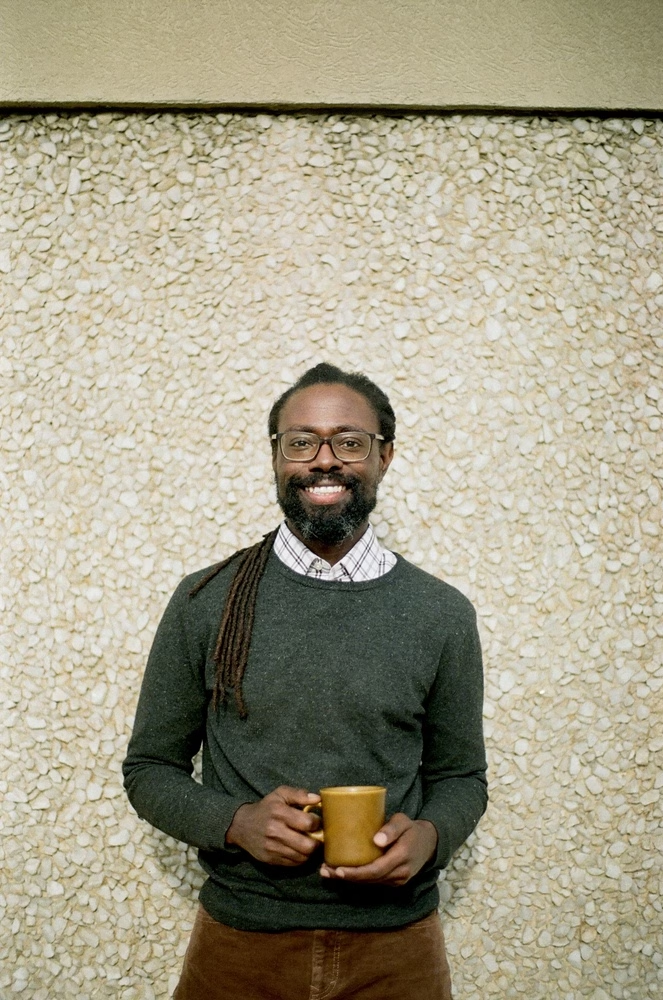
“Detroit would not be where it is today if it were not for the success of Highland Park, yet the city continues to struggle to receive the same investments as Detroit on the development front. In many ways, it has been overlooked/forgotten like that of Black Bottom,” Martell says. “It is my mission to change that narrative by making specialty coffee more accessible to underserved communities. Specialty coffee should not be considered an elitist drink, and it is my hope to create a platform that is representative of the people and at a price everyone can afford.”
Martell has long been a coffee nomad deeply immersed in cultures around the world. After years of living abroad, he returned home in 2021 to be close to family amid the COVID-19 pandemic. Reconnecting with his beloved neighborhood gave him the opportunity to use his wealth of coffee knowledge to serve his community. He founded Sepia Coffee Project in 2021, which is located three miles from Highland Park, though Martell hopes to move the operation to Highland Park in 2026.
Martell says there were maybe five roasters in Detroit proper when he launched the Sepia Project in 2021. Today, close to 10 roasters and 30 independent cafés operate there—a growing number of which are owned by people of color.
Martell is a natural storyteller, which shows in everything Sepia Project-related, from the names of his coffee blends to the café-roastery’s retro aesthetic. With each cup of coffee, Martell offers customers a piece of history from the perspectives of Detroit’s Black and Brown communities.
Sepia Coffee emphasizes representation and inclusion for those they serve and the people from whom they source coffee. The company sources specialty coffee from smallholder farmers worldwide through transparent and equitable value chains. I had the honor of connecting with Martell this fall to learn about his journey to creating the Sepia Project and his ambitious dreams for the future of Highland Park.
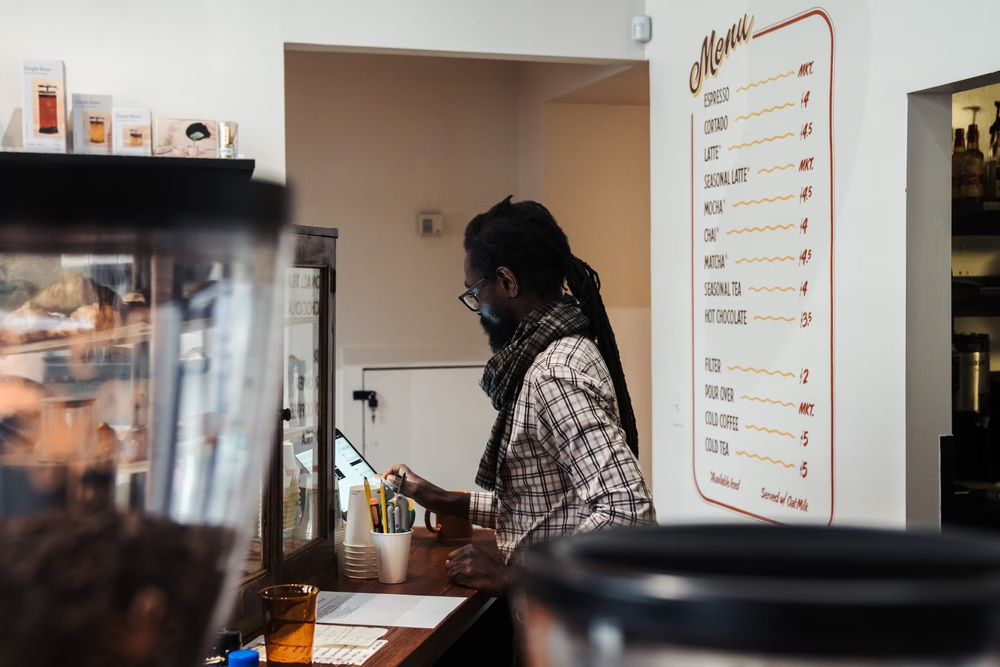
Melina Devoney: Your extensive academic and professional background is quite impressive and intriguing. Tell me more!
Martell Mason: How much time do you have? (Laughs) Well, coffee has been a part of my life for a couple decades. Growing up as a teenager in the 1990s in Detroit’s inner city, there weren’t many places where kids could hang out. We had arcades, roller rinks, and comic book stores, but nothing quite compared to the introduction of coffeehouses. I wasn’t huge into sports, so cafés became an outlet to connect with friends, meet artistic folks, and explore this amazing new brew (that I’m sure I loaded up with sugar!). By the mid-’90s, Starbucks had made its way to the Midwest. So, the summer I turned 16, I dashed to the nearest location in town, filled out an application, and was pretty much hired right there on the spot. So yeah, coffee has been an integral part of my life, and I have Starbucks to thank for that introduction. A perk (of) working at Starbucks was the ability to transfer to other locations. When I was accepted into college out in New England, I already had a job waiting for me. Who would have thought that my love of coffee culture at the time was really just (the) beginning?
While attending undergrad at Northeastern University in Boston, I was a part of an exchange program which gave me the opportunity to study abroad. Majoring in international affairs with a minor in Middle East studies, I made it a priority to spend as much time as I could in North Africa and West Asia. So, in the summers of 2005 and 2006, I studied at the American University in Cairo. As a Black American, whether north, south, east, or west, there is an energy when you return to the continent that can’t be fully described. And although it was North Africa, there were connections to social and cultural norms. You see, Detroit has one of the largest concentrations of Arab Americans in the U.S., so I grew up around the Arabic language, around religious norms, and of course, coffee.
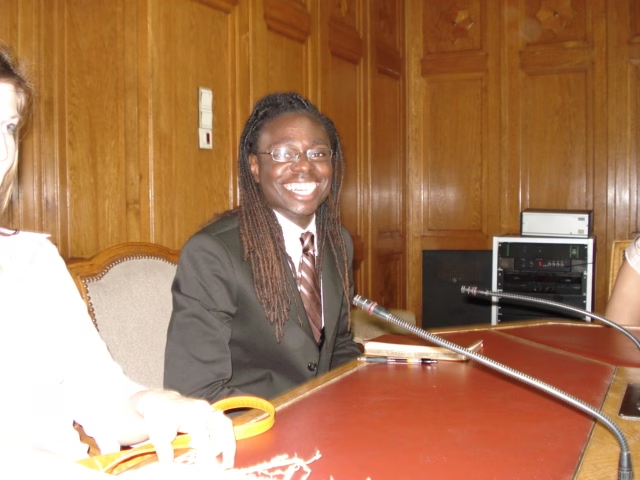
(After) graduating from Northeastern in 2007, I moved down to New York City in the hopes of making it big. (Laughs) While in college, I also had a full-time job in high-end retail. Post-graduation, I had my eyes set on being a senior buyer for a department store like Saks, Barneys, or any fashion house that would hire me. I enrolled at the Fashion Institute of Technology, focusing on merchandising. Yeah, you could definitely say that I was living the dream for a 24-year-old: I was working in sales at Saks Fifth Avenue, making good money for my age, and was hitting the books at night.
All seemed well until late 2008 when the financial crisis hit the world. I was laid off from my job at Saks, given a severance, and that was that. In hindsight, this would become the first pivot of my adult life. Immediately after receiving my papers, I spent the weekend weighing my options. The first question I asked myself was where in the world could I live off my savings until I figured out the next chapter of my life. And the first city that came to mind was Cairo. So, I packed up my belongings, hauled everything back to Detroit, and got an open ticket from Chicago to Cairo.
It would take 12 years before I returned to the U.S. I would not be in the position I am today if it were not for taking that leap when there was so much uncertainty.
In 2013, I returned to the industry but in a different capacity and on a mission. It was around this time that I was embarking on my graduate studies. While living/working in South Korea, I attended the Café Show Seoul, and a light bulb went off in my head, helping to steer the direction of my work. Within the area of sustainable development, I wanted to better understand the coffee supply and value chain. I enrolled in one of School of Oriental and African Studies (SOAS) and University of London’s distance learning programs focusing on the East African coffee trade.
Between 2014 and 2016, I conducted fieldwork in Ethiopia, Kenya, and Tanzania. This included working directly with smallholder farmers, attending national coffee auctions, thanks in part to the Tanzania Coffee Board and Kahawa House, and helping to facilitate container shipments to international markets. My time working at origin would ultimately land me a sales manager position for a Norwegian-American import company, where I managed a part of their European portfolio.
Seeing opportunities further east, in 2017, I opened my own trading business in Istanbul, Turkey, sourcing specialty-grade coffee for roasters throughout West Asia, including Turkey, Saudi Arabia, Kuwait, and Qatar. We even moved a couple of containers to Singapore. My work as a trader has blessed me with friendships that I still hold dear today. It took me to some of the world’s greatest civilizations, all with the intent of making specialty coffee more equitable at the farm and more accessible to consumers. It is the latter (that) has brought me back to Detroit as I see a great opportunity to be of service to my community.
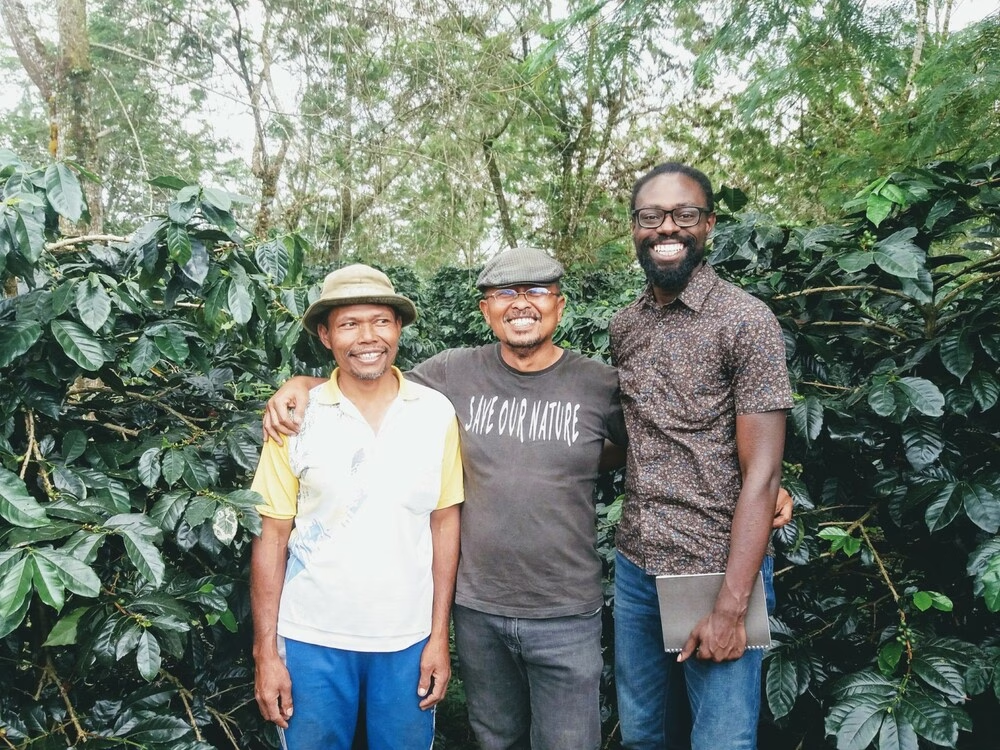
What insights did you gain as a global coffee nomad?
Coffee, like food, brings people together. Gathering for a cup usually involves conversation. These conversations lead to new ideas and perspectives, which become seeds to social and economic change. As a coffee trader, I was able to add a level of transparency to relationships by connecting roasters directly to farmers. Opening my very own roastery allowed these relationships to come full circle, as consumers can now purchase beans with greater transparency and a story directly tied to the source.
At the farm level, I learned the true meaning of resilience and being self-sufficient with limited resources. Farmers continue to receive the shortest end of the stick financially, yet they persevere, be it (by) leaning on faith or the pressure (of) knowing that the entire family is dependent upon the income made from this harvest and the next.
While conducting fieldwork with farmers in Tanzania, I witnessed firsthand the importance of community and drive. The Chagga, a Bantu tribe living on the slopes of Mount Kilimanjaro, are go-getters, making a way out of no way. Anyone who has been to the region knows exactly what I mean. I learned over the years that the Chagga, like many others around the world, travel throughout the continent setting up businesses to trade goods. Whether in Kenya, South Africa, or throughout Western Africa, the Chagga people can be found.
Coming from Detroit, a city that has seen decades of struggle yet has been a key port for art, music, and automotives, I immediately connected to their drive to succeed despite obstacles. And funny enough, my host family in Moshi also made this connection. I was always trying to troubleshoot and come up with ways that they could diversify their income on the farm or find importers to purchase their coffee. They always joked that I was part Chagga!
As an importer/exporter, I learned the importance of building relationships at farm level and within sales markets. We (all have) two degrees of separation in this business. I have to say, during the pandemic, relationships were tested on a micro and macro level. As much as we all wanted to keep it together and be optimistic, the reality was immediately clear, and relationships were ultimately affected throughout the coffee supply/value chain, whether it was job loss, defaults on contracts, or business closures. Thankfully, that time has passed, and industry players have regrouped and mended and are ready for all the good things that lie ahead.
As a roaster, understanding your brand’s identity and target market is essential for sustained growth. Taking the time to research and understand what customers want and need is imperative. I have always compared specialty coffee to my days in high-end fashion. Not only are you making six- or 12-month projections on future coffee contracts—similar to how the fashion industry maps out seasonal trends—but if you have not taken trends into account, you can end up with coffee that your customer base isn’t interested in. This could be tied to specific origins, processing, varieties, and ultimately price. At Sepia Coffee, we source coffee for our partners with intention, and it shows in the cup.
As a café owner, priority has always been placed on providing a unique experience, one that focuses on quality, service, and storytelling. Sepia Coffee goes beyond bright packaging and a nuance of flavor profile descriptors. We tell a story of Detroit and its rich history, which resonates with our entire country—be it African Americans coming from the south during the Great Migration, or our third- and fourth-generation Arab and Mexican American communities, which also call Detroit home.
We will post part two of our interview with Martell Mason tomorrow.
This article originally appeared in the December 2025 + January 2026 issue of Barista Magazine. Read more of the issue online here for free.
ABOUT THE AUTHOR
Melina Devoney (she/her) is a barista and freelance writer in Los Angeles zeroed in on coffee and agriculture. She aims to amplify the voices of farmers and a diversity of perspectives within the coffee industry, and she’s happiest when running on wooded trails and dancing at concerts.

Subscribe and More!
As always, you can read Barista Magazine in paper by subscribing or ordering an issue.
Support Barista Magazine with a Membership.
Signup for our weekly newsletter.
Read the February + March 2026 Issue for free with our digital edition.
For free access to more than five years’ worth of issues, visit our digital edition archives here.